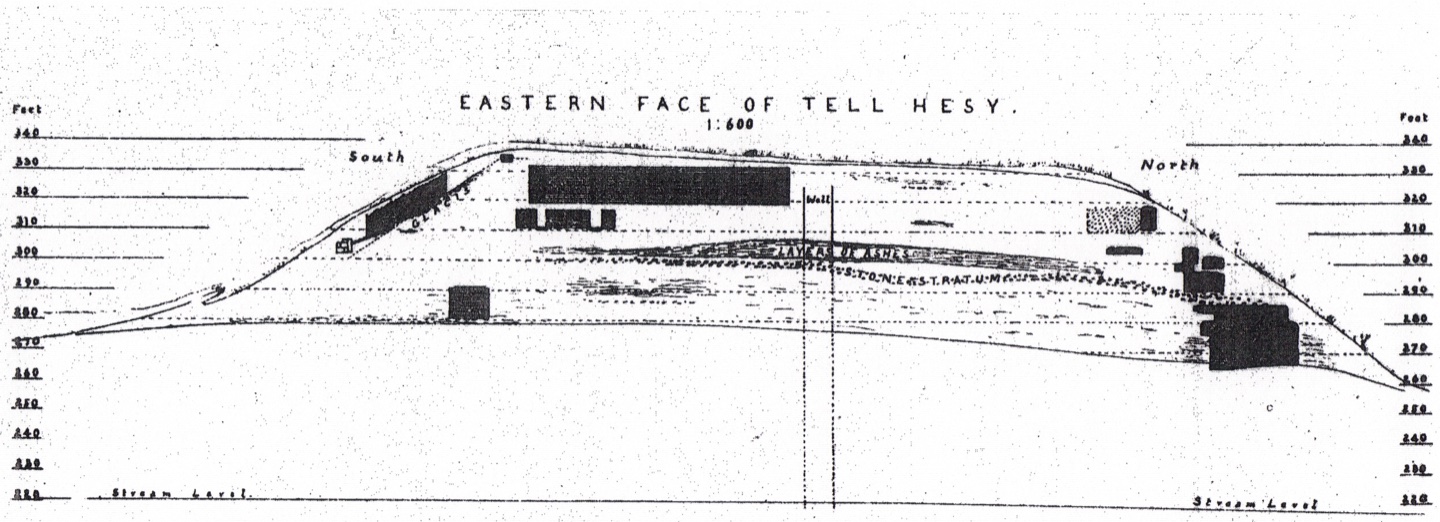
This wiki has a compilation method. The method has three layers, each drawn from a named twentieth-century intellectual tradition: archaeology (preservation discipline — provenance, in-situ context, stratigraphy); interpretation in Freeman Tilden’s 1957 sense (revelation discipline — the move from information to meaning, internal to each article); and a constructionist inspectable-archive ethic (Berger & Luckmann, Latour, with a lineage in Benjamin’s Arcades Project and Warburg’s Mnemosyne Atlas) — the recognition that meaning is constructed in the encounter between reader and arrangement, and that the discipline of the work is to make the construction visible rather than to perform it for an audience. The argument is that this method is the wiki’s actual standing claim: not disciplinary authority, but the visibility of construction — which is the exact inverse of the citation-collapse pathology the companion article on AI and knowledge production names on the production side.
Overview
This wiki is a compilation. It is also, by design, a record of how the compilation was made — what was excavated, what was preserved, what was arranged, what was made public, in what order and from what fragments. The compilation method is older than the wiki, older than generative AI, older than the personal-knowledge-management discourse — but the substrate is new, and the substrate makes the method more legible than it has been since the mid-twentieth-century traditions that articulated its parts.
Three traditions name the three layers. The first is archaeology: the discipline of preserving provenance, recording in-situ context, distinguishing the find from the reconstruction. The second is interpretation in Freeman Tilden’s sense (Interpreting Our Heritage, 1957) — the discipline by which information is made into revelation, by which a compiled article becomes more than the sum of its raw sources. The third is the recognition, drawn from social-construction theory and from the practical lineage of the arranged archive (Walter Benjamin’s Arcades Project; Aby Warburg’s Bilderatlas Mnemosyne), that meaning is constructed in the encounter — that the wiki’s job is therefore not to transmit meaning to a reader but to make the construction inspectable so that the reader can follow it, contest it, or rearrange it.
The article describes each layer, articulates the mode of address that follows from the third, walks through the discipline in practice using a recent worked example, points at the instrument (Trowel) that the method has produced, situates the approach against Karpathy’s adjacent LLM-knowledge-base pattern, and closes on the standing claim: the wiki’s authority is the visibility of its own construction.
Key concepts
- Archaeology — the preservation half of the method. Inbox as dig site; raw entries as field notes; articles as reconstructions; frontmatter dates as the angle of view.
- Interpretation (Tilden 1957) — the revelation half. “Information is not Interpretation. Interpretation is revelation based upon information.” The discipline internal to each article.
- Constructionism + inspectable archive — meaning is constructed in the encounter; the wiki’s discipline is to make the construction visible.
- For-me-as-method, for-others-as-invitation — the resolution of the apparent binary between writing for an audience and keeping a private record.
- Citation collapse — the pathology the method is designed to resist; see the companion article on knowledge production.
- Trowel — the local editor for the published content collections. The method’s instrument.
A diagnosis: the production-axis pathology
The companion article on AI and knowledge production diagnoses a pathology that runs across four axes — veracity, meaningfulness, production, consumption — under the paired frames of spectacle (correspondence failure) and ouroboros (grounding failure). The production-axis instance is the one this article responds to directly: under generative scale, the conditions under which a piece of writing was made have become routinely invisible. The summary stands without its source. The synthesis circulates without its citations. The article appears without a record of which fragments were consulted, which were preferred, which were excluded, or on what grounds. The construction is erased; what remains is the appearance of a finished thing.
This pathology is not new. Citation collapse predates the language model by centuries — the Encyclopaedist tradition, the textbook compendium, the news summary, the conference panel paraphrase. What generative AI has done is industrialise it. The compilation step, once expensive in time and attention, is now cheap; and at cheap-compilation scale, the discipline that distinguishes responsible synthesis from spectacle synthesis becomes the only thing that matters. Either the construction is visible, or it isn’t. There is no neutral ground.
The personal-knowledge-management discourse, in its dominant “second brain” register, does not address this directly. Its emphasis is on capture and retrieval — getting material in, getting it back when needed. Compilation is treated as a private cognitive act whose product is a synthesis the user trusts because they made it. This is fine for personal use; it is insufficient as a public method. A public artefact whose construction is invisible is structurally identical to the AI-generated summary whose sources have been stripped, regardless of whether a human or a model produced it. The discipline that distinguishes them is not the substrate of production but the visibility of the construction.
The wiki’s compilation method is the response. It treats every published article as an inspectable archive: the synthesis foregrounded, the raw sources preserved with provenance, the connective infrastructure (wikilinks, citation graph, frontmatter dates) made into structural features of the work rather than decoration. The construction is part of the artefact.
The first layer: archaeology
The first layer is archaeology in the disciplinary sense — Petrie’s stratigraphic method, Schliemann’s contested early excavations and the corrections that followed, the field discipline that emerged in the late nineteenth and twentieth centuries. The metaphor is not loose. The wiki’s workflow mirrors the practice in concrete particulars.
The inbox is the dig site. Months of capture — web clippings, NotebookLM exports, tweets pulled in via the Dewey bookmarks workflow, RSS items, raw PDFs, conversation transcripts — accumulate in dated layers. Each item carries the date and context of its capture; the layers below are older. When a thread is pursued, the relevant fragments are excavated from this stratigraphy, and the excavation itself has a date — the act of bringing material up is part of the record.
Raw entries are the field notes. When a fragment is judged worth compiling, it is written up as a raw entry — YAML frontmatter recording source URL, author, publisher, date of capture, date of the original, “to verify before citing” caveats where the provenance chain is incomplete, and “compiled into” links once an article draws on it. This is the field-note discipline made structural. The raw entry preserves in-situ context — what was around the fragment when it was found, what kind of layer it came from, which other material it associated with. Nothing about the raw entry is decorative; every field carries provenance.
Compiled articles are reconstructions. An article like the Spectacle/Ouroboros piece is a reconstruction synthesised from primary fragments with the citation chain intact. The article is the museum exhibit; the raw entries are the catalogue cards; the inbox is the un-catalogued storeroom. The exhibit is what gets read most often; the catalogue and storeroom are what makes the exhibit accountable.
Citation collapse is the inverse of archaeological discipline. Pulling artefacts out of the ground without recording layer or association is the canonical malpractice of nineteenth-century antiquarian collection — and the canonical recovery of modern field archaeology was to insist on precisely the recording. The wiki, structurally, performs the same recovery in the domain of text. Source-stripping is the antiquarian’s malpractice; provenance-preservation is the field method’s response.
The lens of the present. Like the archaeologist, the wiki compiler is aware that the reading is positioned in their own moment. Frontmatter dates are not decoration — they record the angle of view. An article dated 2026-05-14 means something different than the same article would have meant in 2024 or will mean in 2030. The date is part of the artefact, not a metadata afterthought.
This is the layer that handles preservation. It is necessary but not sufficient. An honest record of what was found does not yet say anything about what it means.
The second layer: interpretation
The second layer is interpretation in Freeman Tilden’s sense. Tilden — interpreter at Great Smoky Mountains National Park, author of the 1957 Interpreting Our Heritage that became the founding text of the United States National Park Service interpretive tradition — articulated a set of principles for the practice of making heritage materials meaningful to a visitor. Two of his principles do the heaviest work here.
The first is the foundational distinction: “Information, as such, is not Interpretation. Interpretation is revelation based upon information.” This maps exactly onto the wiki’s raw / article split. The raw entries are the information — preserved with chain of custody, available for inspection, but not yet interpreted. The compiled article is the revelation — the move that takes the fragments and shows what they make visible together, what pattern they describe, what position they support or undermine. The article is not a summary of the raw entries; it is an interpretive act that uses them as material.
The second is Tilden’s fourth principle: “The chief aim of Interpretation is not instruction, but provocation.” This describes why the articles take positions rather than performing neutral summary. A wiki article that merely surveys the field is information, not interpretation. A wiki article that takes a position — that argues, for example, that the productive tension between source and representation is recoverable inside AI-mediated workflows but only if the interface is designed to preserve it — is doing the interpretive work Tilden describes. The reader is being provoked, not instructed.
Tilden’s other principles — relevance to the visitor’s personality and experience, the whole rather than the part, the recognition that interpretation is an art combining many arts — describe the discipline within each article: how it speaks from a practitioner vantage, how it synthesises rather than enumerates, how the writing matters as much as the substance.
But Tilden has to be repositioned, not adopted whole. His interpreter is a park ranger — guide on the trail, has been there before, knows the site, shepherds the visitor through it. The wiki does not do that. The visitor metaphor implies a one-way relationship: the interpreter knows, the visitor learns. The mode of address the wiki actually adopts is structurally different, and that difference is the third layer.
A further caveat. Heritage interpretation as a field has had its own internal critique since the 1980s — the master-narrative problem, the authoritative-voice problem, the question of whose heritage gets interpreted and from whose vantage. The wiki takes Tilden as a starting principle for the interpretive move (information → revelation), not as the last word on what counts as good interpretation. The third layer answers what the post-Tilden critique was reaching toward.
The third layer: the inspectable archive
The third layer is constructionist. Its philosophical lineage runs through Peter Berger and Thomas Luckmann’s The Social Construction of Reality (1966) and through Bruno Latour’s later actor-network theory. Its practical lineage runs through two earlier twentieth-century projects: Walter Benjamin’s Das Passagen-Werk (the Arcades Project, written 1927–1940, published posthumously 1982) and Aby Warburg’s Bilderatlas Mnemosyne (1924–1929). The recognition shared across both lineages is that meaning is not transmitted from a knower to a learner; it is constructed in the encounter between reader and arrangement, mediated by an interpretive community and a cultural moment.
The practical consequence is decisive for the wiki’s mode of address. If meaning is constructed in the encounter, then the wiki’s job is not to package a finished interpretation and hand it to a reader. It is to make the construction inspectable. The arranged archive is the artefact; the arrangement is the argument; the publication is the act of making the arrangement available for a reader to inspect, follow, contest, or rearrange.
Benjamin’s Arcades Project is the canonical illustration. The work is an enormous compilation of fragments — quotations, observations, photographs, citations — arranged into thematic Konvolute (bundles). Benjamin did not write a treatise on nineteenth-century Paris and then footnote it with sources. He compiled the sources, arranged them, annotated the arrangement, and left the arrangement itself as the argument. Reading the Arcades Project is participating in Benjamin’s compilation; the reader does the synthesis with Benjamin’s arrangement as the substrate.
Warburg’s Mnemosyne Atlas makes the same move in a different medium. Sixty-three large black panels, each carrying dozens of pinned reproductions arranged into thematic constellations — image-fragments from antiquity, the Renaissance, modern advertising, astrology, postal stamps. The argument is in the arrangement: certain gestures, certain compositions, certain visual rhymes recur across centuries and across registers, and the panels make the recurrence visible without paraphrasing it into prose. The viewer participates in the construction; the panels are inspectable rather than declarative.
The wiki is closer in spirit to these projects than to either the blog post or the academic article. The articles are not declarations to be accepted or rejected; they are arrangements with their fragments preserved. A reader who disagrees with the Spectacle/Ouroboros article’s position on neurosymbolic mitigation can follow the citation chain to Routhier, Boidy, Ward, Bhatnagar, and the Loomis opinion and see whether the same fragments yield a different reading. That option — that the construction is recoverable — is what distinguishes the wiki’s mode of publication from the second-brain register on one side and from the polished essay register on the other.
The Latourian gloss is that the meaning is a network effect — not located in the article alone, not in the reader alone, not in any single fragment, but produced by the network of relations among them, including the non-human actants (Trowel, the publishing pipeline, the wikilink graph, the frontmatter schema). The wiki is precisely such a network, and it is constructed to make the network visible.
Mode of address: for-me-as-method, for-others-as-invitation
The third layer resolves an apparent binary that troubles every public-facing personal-knowledge-management project. Is the wiki written for others, or for me? The two answers each name a real practice. Writing for others — the Tilden park-ranger mode — implies audience research, register-fitting, optimisation for reception; it risks tipping into performance. Writing for self and leaking to public — the diary-or-notebook mode — preserves the integrity of the thinking but risks insularity, opacity, and a self-indulgence that no preservation discipline can compensate for.
The wiki resolves this differently. The compilation is for-me-as-method: the act of arranging fragments, writing raw entries, drafting and revising articles is where the meaning gets constructed, and the first reader of that construction is the compiler. The publication is for-others-as-invitation: the inspectable archive, once made public, is an invitation to a reader to follow what was done, to inspect the arrangement, to see whether the same fragments yield the same reading for them — and, if not, to perform the reconstruction differently. The reader is a fellow inquirer at the dig, not a visitor on a tour and not an audience for a performance.
This is why the wiki’s articles can take positions without sliding into rhetorical persuasion, and why they can preserve provenance without sliding into encyclopaedic neutrality. The position is honest about being a position; the provenance is honest about being the material the position was constructed from. The reader is invited to inspect both.
The mode of address has practical consequences for the writing itself. A wiki article assumes a reader who has come to look — who is willing to follow a citation chain, to hold an unfamiliar reference, to engage with the construction rather than skimming the conclusion. The writing therefore does not perform the reader-friendliness moves of the popular-explainer register: no hooky openings, no managed concision, no pre-empted objections that condescend by anticipating them. It also does not perform the disciplinary moves of the academic register: no front-loaded literature review, no methodological apologetics, no defensive hedging. It writes as if to a colleague at a workbench. Here is what I found. Here is what I made of it. The catalogue is in the appendix.
The discipline in practice
The method described abstractly is the same method that produces the articles published on the site. The most recent worked example is the Spectacle/Ouroboros article published 2026-05-14. Its genesis is the closest available illustration of the workflow.
The article began as a NotebookLM-generated essay titled The Hyper-Spectacle: From Situationist Theory to the Algorithmic Mediation of Reality. The piece arrived in the inbox as a single artefact. Its diagnostic moves were useful — particularly the XAI-as-recuperation framing and the verisimilitude-over-truth observation — but its Situationist coda and four-phase Debord schema were rhetorical rather than derived. The first triage step was to read it carefully, mark the moves that were doing real work, and mark the moves that were importing unearned vocabulary.
The next step was excavation of the references the diagnostic moves implied: McLuhan 1966 (already in the wiki as a published article, with a raw entry recording the CBC clip’s provenance and the caveat that the quotation has not been verified against the original broadcast); Debord 1967 (added as a raw entry citing the Knabb annotated English translation, Bureau of Public Secrets, 2014); Routhier’s With and Against (Verso, 2023) and Boidy’s review in the Nordic Journal of Aesthetics 68 (2024); Ward’s foreword in Law and Contemporary Problems (Duke, 2021); Bhatnagar’s evidentiary-implications article in Northwestern Journal of Technology and Intellectual Property (2023); Attali’s January 2025 column; the Morgan and Purje Hyperallergic illustrated guide to Debord (2016) as a public-facing entry point. Six new raw entries were written, each with the standard frontmatter and the standard “to verify before citing” discipline.
The article was drafted against this material. The shape was agreed in advance — three parts: diagnose the failure modes, survey the response landscape, take a position. The drafting consisted of writing each part as a piece of substantive prose, with citations woven into the body and each wikilink to a raw entry made visible. A subsequent citation pass integrated the six new raw entries into the article in four substantive edits — a new paragraph introducing Routhier and Boidy as the in-lineage refutation of Situationist refusal, an acknowledgement of Bhatnagar as the strong case for XAI-as-remedy, a Ward-and-Pasquale paragraph distinguishing complexity-opacity from trade-secret-opacity in Loomis, an Attali paragraph as the contemporary public-letters extension of Debord.
The published article is the reconstruction. The raw entries are the catalogue. The inbox stratigraphy — the original NotebookLM piece, the tweets and PDFs and clippings that surrounded the work — is the un-catalogued storeroom that a sufficiently curious reader could in principle dig back through. None of this is hidden. None of it is decorative.
The same workflow applies regardless of source. A piece of writing that begins from a single tweet, a paper preprint, a podcast transcript, or a conversation goes through the same stages — capture, triage, raw, compile, publish — and produces an article with the same structural properties. The discipline is invariant under source.
Trowel: the practice as instrument
The wiki has produced a tool. Trowel is a local editor for the published content collections — the AI Wiki articles, the raw entries, the Legal Tech Wiki, the projects collection — used to manage the publication side of the pipeline. The name is deliberate. A trowel is the physical instrument an archaeologist uses to move material from the dig face to the find tray with control: small enough to preserve context, large enough to do the work. The tool is named for the discipline; the tool exists because the discipline required it.
The ordering matters. Trowel is not a clever brand laid over an unrelated workflow. The method produced the tool. The tool now shapes what the method can do — which is the ordinary feedback loop of instrument and practice — but the practice came first, and the tool was built to support the practice rather than to invent it.
This is the existence proof of the method’s transferability. A workflow that lives only in one person’s habits is hard to argue is a method. A workflow that has been articulated clearly enough to be made into an instrument is, by demonstration, a method. The discipline is portable in the way a craft is portable: the principles can be read, but the discipline is internalised by working at the bench with the right tools to hand.
A separate article on Trowel — what it does, how it embodies the method, what it makes possible that the workflow alone does not — is worth writing eventually. For this article, the point is the existence proof: the practice has produced its own instrument.
Adjacent: Karpathy and the LLM knowledge base
The closest contemporary pattern to compare against is Karpathy’s LLM Knowledge Base. The pattern, as Karpathy described it, is to drop raw sources into a folder, point a language model at the folder, and use the model to draft a structured wiki on top of the sources. The compilation step that used to make personal-knowledge systems collapse under their own weight is, in this pattern, machine-assisted.
The two methods are adjacent and complementary, not competing. Karpathy’s pattern is closer to note-taking with an assistant — capture, query, draft, refine. The wiki’s method is closer to fieldwork with a record — excavation, in-situ preservation, reconstruction, public exhibit. Different verbs, different ethics, different artefacts. Karpathy’s pattern optimises the compilation step for personal use; the wiki’s method optimises the compilation step for public inspection.
The two are usefully combined. A language model can be a real collaborator in the excavation and triage stages — surfacing connections across raw entries, drafting first passes at synthesis, catching missed citations. The wiki’s discipline does not exclude that; it requires only that the compilation’s construction remains visible regardless of who or what assisted at any stage. A model-assisted draft and a hand-written draft are equally subject to the inspectable-archive ethic. If the construction is visible — the sources cited, the moves declared, the position taken openly — the question of whether a model helped at a particular point is a workflow question, not a methodological one.
The pattern to be distinguished from is the unattributed model-drafted summary — the AI-generated essay that arrives without its sources, without its reasoning chain, without an account of which fragments it drew on or which it ignored. That is not a knowledge-base pattern; it is the citation-collapse pathology. The wiki’s method is the response to that pathology, regardless of whether the offending artefact was produced by a model or by a human.
The standing claim
The wiki’s authority — its standing to publish what it publishes — is not disciplinary. It does not claim the standing of legal scholarship, media-theory scholarship, machine-learning research, or any other credentialed discipline. The author profile that produced it — twenty-five years across educational technology, podcast production and law-related AI application development on local hardware — is real, and the practitioner vantage matters for the substance of certain articles, but the practitioner vantage is not what gives the wiki the standing to be a wiki.
The standing is the visibility of construction. The wiki publishes only what it can show its working for. Every article has its raw entries; every raw entry has its source URL and its publication metadata and its “to verify before citing” caveats where the chain is incomplete; every frontmatter date records the moment of compilation; every wikilink makes the connective infrastructure inspectable. The reader does not have to trust the author’s authority because the reader can perform the test the author performed: read the same fragments, follow the same arrangement, see whether the same revelation lands.
This is the inverse of the citation-collapse pathology. The pathology is meaning-construction whose construction has been erased; the discipline is meaning-construction whose construction is preserved. The two are structurally complementary, and the discipline is meaningful precisely because the pathology is the default condition under generative scale.
The wiki’s method is therefore the wiki’s argument. Not the rhetorical move of trust the author’s qualifications; not the disclaimer move of this is only a personal journey. But here is what was excavated; here is what was made of it; here are the fragments and here is the arrangement; the construction is on the table. The reader is welcome. The dig is open.
Limitations and open questions
The method described above is not a finished proposal. Several questions remain live.
The interpretive-community problem is real. The inspectable-archive ethic accepts a degree of opacity to readers outside the community whose references it assumes. Traceability is meaningful only for a reader willing to follow the citation chain; for a reader skimming the synthesis, the discipline of preservation gets no credit. The trade-off is honest, but it is a trade-off. The wiki could be made more reader-friendly at the cost of tipping toward the Tilden park-ranger mode the third layer was articulated against. Where the balance should sit is an open practical question.
Transferability remains underspecified. Trowel is one existence proof that the method can be made into an instrument, but the method has not yet been articulated in a form portable to a different compiler with different material. This article is the first attempt at that articulation; whether it is sufficient to support another compiler’s practice is unknown and untested.
The scale question is unanswered. The wiki currently holds around fifteen articles and a few dozen raw entries. The Benjamin and Warburg precedents demonstrate that arranged-archive practice can scale to thousands of fragments, but the disciplines of in-situ preservation and citation maintenance become harder as the network grows. Whether the same discipline survives at a hundred articles, or a thousand, or whether the method has a natural ceiling, is not yet known from the wiki’s own experience.
The model-collaboration question is open. A language model can be a real collaborator at any stage of the workflow — surfacing connections, drafting first passes, catching missed citations. The inspectable-archive ethic requires that the construction remain visible regardless of who or what assisted at any stage, but the method has not yet articulated what makes a model-assisted draft inspectable in the same sense as a hand-written one. The companion Spectacle/Ouroboros article opens this question on the production side; this article does not close it.
The Tilden caveat is carried through but not worked out. The second layer inherits the post-1980s critique of heritage interpretation implicitly through the third layer — the inspectable-archive ethic is the constructive answer to the master-narrative problem — but the article does not develop the critique in detail. A more complete treatment would do so.
Sources
- Tilden, F. (1957). Interpreting Our Heritage. University of North Carolina Press; 4th edition with new material by R. Bruce Craig, 2007. The founding text of the United States National Park Service interpretive tradition; source of the information / interpretation distinction and the six interpretive principles.
- Benjamin, W. (1982). Das Passagen-Werk, ed. Rolf Tiedemann. Suhrkamp. English translation: Howard Eiland & Kevin McLaughlin, The Arcades Project, Belknap / Harvard University Press, 1999. The canonical case of compilation-as-argument; the Konvolute as inspectable arrangement.
- Warburg, A. (1924–1929). Bilderatlas Mnemosyne. Reconstruction and critical edition: Roberto Ohrt & Axel Heil, ZKM Karlsruhe / Hatje Cantz, 2020. Visual exemplar of the inspectable-archive ethic — arrangement of image-fragments as argument, without paraphrastic prose.
- Berger, P. L. & Luckmann, T. (1966). The Social Construction of Reality: A Treatise in the Sociology of Knowledge. Doubleday / Penguin. Foundational text for the constructionist account of meaning the third layer draws on.
- Latour, B. (2005). Reassembling the Social: An Introduction to Actor-Network-Theory. Oxford University Press. The actor-network gloss on the inspectable-archive — meaning as a network effect distributed across human and non-human actants.
- The Spectacle and the Digital Ouroboros - AI, Knowledge Production, and the Recoverable Tension — companion article; the production-axis pathology this method is designed to resist, and the worked example whose genesis the Discipline in practice section walks through.
- Obsidian as a Second Brain - Capture, Compile, Publish — the adjacent personal-knowledge-management approach; contrast point on capture / compilation / publication as distinct stages.
- The LLM Knowledge Base - Karpathy’s Wiki Compilation Pattern — the adjacent contemporary pattern; contrast point on note-taking-with-assistant vs. fieldwork-with-record.
- Marshall McLuhan in 1966 - Anticipating the Information Economy — the mid-century lineage point. The methodological move (ask what the interface does) used in the companion article; cited here as part of the Tilden-McLuhan-Debord 1957–1967 generation that sketched the present from a position three substrates back.